Warehouse logistics encompasses the strategic management of goods and information flow within a storage facility, from receiving raw materials or finished products to preparing them for final shipment. For B2B companies, this is not merely about storage; it is a critical operational pillar that directly influences supply chain efficiency, cost control, and customer satisfaction. Effective warehouse logistics ensures that products are available, accessible, and delivered on time to business clients, directly impacting service level agreements and overall profitability. Understanding its practical components allows B2B firms to optimize their internal processes, reduce operational friction, and maintain a competitive edge in complex supply chains.
Core Components of Warehouse Logistics
The operational framework of warehouse logistics is built upon several interconnected processes, each requiring precise execution to maintain flow and accuracy.
Receiving and Putaway
This initial stage involves the physical acceptance of incoming goods, verification against purchase orders, and quality inspection. For B2B, this often means handling bulk shipments, specific labeling requirements, and precise documentation. Efficient receiving minimizes bottlenecks at the dock and ensures inventory accuracy from the outset. Putaway then involves moving received items to their designated storage locations, often optimized for accessibility, product velocity, and storage conditions. Strategic putaway planning can significantly reduce retrieval times for subsequent order fulfillment.
Storage Management
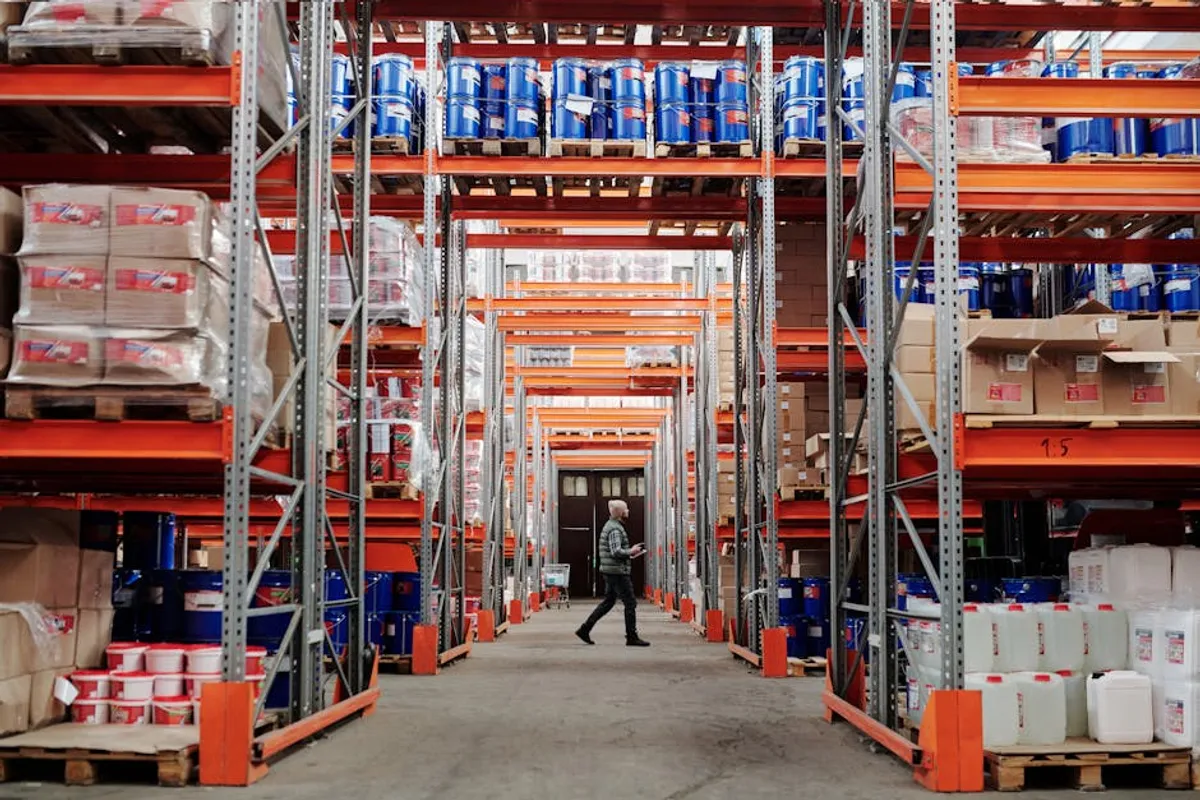
Effective storage management maximizes warehouse space utilization while ensuring product integrity and accessibility. This includes decisions on shelving, racking systems, and floor layouts. B2B operations frequently manage diverse product types, from large industrial components to palletized consumer goods, necessitating flexible storage solutions. Strategies like slotting, which positions fast-moving items in easily accessible locations, and adherence to FIFO (First-In, First-Out) or LIFO (Last-In, First-Out) principles, are crucial for managing inventory age and preventing obsolescence.
Order Picking and Packing
This phase involves retrieving specified items from storage to fulfill customer orders and preparing them for shipment. B2B picking often deals with larger order volumes and fewer, more complex SKUs per order compared to B2C. Common picking methods include:
- Batch Picking: An operator picks multiple orders simultaneously.
- Zone Picking: The warehouse is divided into zones, and pickers are assigned to specific zones.
- Wave Picking: Orders are grouped into waves based on criteria like delivery route or priority.
Packing for B2B requires robust packaging to withstand transit, often involving specific palletizing, crating, or custom containerization, along with precise labeling for commercial recipients.
Shipping and Distribution
The final stage of warehouse logistics involves preparing packed orders for dispatch and coordinating their transport to the B2B customer. This includes selecting appropriate carriers, generating shipping documentation, and loading vehicles. Route optimization, load consolidation, and scheduling are critical for minimizing transportation costs and ensuring timely delivery. For B2B, adherence to specific delivery windows, proof of delivery, and managing returns are integral parts of the distribution process. This includes selecting appropriate carriers, generating the necessary shipping documentation, and loading vehicles.
Inventory Management
Inventory management within the warehouse context focuses on maintaining optimal stock levels to meet demand without incurring excessive holding costs. This involves demand forecasting, setting reorder points, and implementing cycle counting or physical inventory checks to reconcile actual stock with system records. Accurate inventory data prevents stockouts, reduces carrying costs, and improves order fulfillment reliability, which is paramount in B2B relationships.
Technology and Automation in B2B Warehousing
Modern B2B warehouse logistics heavily relies on technology to enhance efficiency, accuracy, and visibility.
Warehouse Management Systems (WMS)
A WMS is a software solution that provides real-time visibility into inventory, streamlines operations, and optimizes warehouse processes from receiving to shipping. For B2B companies, a WMS is indispensable for managing complex order profiles, tracking large volumes of goods, and integrating with enterprise resource planning (ERP) systems. It automates tasks like putaway logic, picking route optimization, and generating shipping labels, significantly reducing manual errors and improving throughput.
Automation and Robotics
Automation technologies, such as automated guided vehicles (AGVs), autonomous mobile robots (AMRs), automated storage and retrieval systems (AS/RS), and conveyor belts, are increasingly deployed in B2B warehouses. These systems reduce reliance on manual labor for repetitive or heavy tasks, improve safety, and increase the speed and accuracy of material handling. While requiring significant initial investment, automation can deliver substantial long-term returns through reduced operational costs and increased capacity.
Pro Tip: Data accuracy in warehouse logistics is non-negotiable for B2B operations. Inaccurate inventory counts or mislabeled shipments cascade into delays, incorrect deliveries, and ultimately, damaged client relationships. Implement rigorous cycle counting protocols and leverage WMS features for real-time validation to ensure your system reflects physical reality.
Optimizing Warehouse Logistics for B2B Success
Strategic optimization goes beyond mere operational execution, focusing on continuous improvement and adaptability.
Data-Driven Decision Making
Leveraging data analytics from WMS and other systems allows B2B companies to identify bottlenecks, measure performance metrics (e.g., order fulfillment rates, inventory turns, picking accuracy), and make informed decisions. Analyzing historical data can refine demand forecasts, optimize labor allocation, and improve warehouse layout, leading to more efficient resource utilization and cost savings.
Supply Chain Integration
Integrating warehouse logistics with broader supply chain functions—including procurement, production, and transportation—creates a seamless flow of information and goods. This integration enables better coordination with suppliers and customers, facilitates just-in-time (JIT) inventory strategies, and enhances overall supply chain responsiveness, which is critical for meeting dynamic B2B client demands.
Risk Management and Contingency Planning
B2B warehouse operations are susceptible to disruptions from natural disasters, labor shortages, supplier issues, or transportation delays. Developing robust risk management strategies, including backup storage options, diversified carrier networks, and contingency plans for critical processes, ensures operational resilience and minimizes the impact of unforeseen events on B2B service levels.
Driving Efficiency in B2B Warehouse Logistics
Effective warehouse logistics is a strategic asset for B2B companies, translating directly into competitive advantages. By meticulously managing receiving, storage, picking, packing, and shipping, businesses can ensure product availability, reduce operational costs, and enhance the reliability of their supply chain. The integration of advanced technologies like WMS and automation further refines these processes, offering real-time visibility and increased throughput. Continuous analysis of operational data and proactive risk management are essential for adapting to market changes and sustaining high service levels. Prioritizing these elements allows B2B firms to build a resilient and responsive logistics infrastructure that supports growth and strengthens customer relationships.
Frequently Asked Questions
What is the primary goal of warehouse logistics in B2B?
The primary goal is to efficiently and accurately manage the flow of goods and information within a warehouse to support B2B sales, ensuring products are available, costs are controlled, and customer orders are fulfilled on time and without error.
How does a WMS benefit B2B warehouse operations?
A WMS provides real-time inventory visibility, optimizes storage and picking processes, automates tasks, reduces manual errors, and integrates with other enterprise systems, leading to increased efficiency, accuracy, and responsiveness for B2B companies.
What are common challenges in B2B warehouse logistics?
Common challenges include managing diverse product types, optimizing space utilization, maintaining inventory accuracy, handling fluctuating demand, integrating with complex supply chains, and mitigating risks from disruptions like labor shortages or transportation delays.
How can B2B companies measure the effectiveness of their warehouse logistics?
Effectiveness can be measured using key performance indicators (KPIs) such as order fulfillment rate, on-time delivery rate, inventory accuracy, picking accuracy, warehouse space utilization, cost per order, and inventory turnover rate.