Warehouse logistics forms the operational backbone of any supply chain, directly influencing efficiency, cost control, and customer satisfaction. For logistics managers, understanding its intricacies is not merely academic; it is fundamental to optimizing product flow from receiving to final dispatch. This guide offers a practical exploration of warehouse logistics, detailing its essential components, common challenges, and actionable strategies to drive profitability and operational excellence.
Defining Warehouse Logistics Beyond Storage
Warehouse logistics encompasses the comprehensive management of goods within a storage facility, extending far beyond simple holding. It involves a coordinated series of activities designed to ensure products move efficiently, accurately, and cost-effectively through the warehouse. The primary objective is to support the broader supply chain by facilitating timely order fulfillment and inventory control.
Key activities within warehouse logistics include:
- Receiving: The process of accepting incoming goods, verifying quantities against purchase orders, and inspecting for damage. Efficient receiving minimizes bottlenecks and ensures accurate inventory updates.
- Putaway: Transporting received items to their designated storage locations. Strategic putaway considers product velocity, size, and handling requirements to optimize retrieval times.
- Storage: The systematic organization and safekeeping of inventory. This involves selecting appropriate storage methods (racking, shelving, bulk storage) and ensuring accessibility.
- Picking: The retrieval of specific items from storage to fulfill customer orders. This is often the most labor-intensive activity, making picking path optimization critical.
- Packing: Preparing picked items for shipment, including packaging, labeling, and documentation. Effective packing protects goods in transit and minimizes shipping costs.
- Shipping: Loading packed orders onto outbound vehicles and coordinating with carriers. This includes route planning and ensuring compliance with shipping regulations.
- Inventory Management: Tracking inventory levels, locations, and movements. Accurate inventory data is crucial for demand forecasting, preventing stockouts, and reducing carrying costs.
- Order Fulfillment: The entire process from order placement to delivery, with warehouse logistics playing a central role in executing the physical movement of goods.
Core Components for Operational Excellence
Effective warehouse logistics relies on the seamless integration and optimization of several critical components. Each plays a distinct role in ensuring smooth operations and contributes to overall supply chain performance.
Warehouse Management Systems (WMS)
A WMS is the central nervous system of modern warehouse operations. It is a software application designed to support and optimize warehouse functionality and distribution center management. A robust WMS provides real-time visibility into inventory, streamlines processes, and reduces manual errors. It orchestrates receiving, putaway, picking, packing, and shipping, often integrating with enterprise resource planning (ERP) systems and transportation management systems (TMS).
Best for: Enhancing inventory accuracy, optimizing labor utilization, improving order fulfillment speed, and reducing operational costs through data-driven decisions.
Inventory Management Strategies
The method of managing inventory directly impacts capital tied up in stock and the risk of obsolescence. Common strategies include:
- First-In, First-Out (FIFO): Ensures older inventory is sold or used first, ideal for perishable goods or items with limited shelf life.
- Last-In, First-Out (LIFO): Assumes the most recently acquired goods are sold first, often used for non-perishable items where cost accounting benefits are sought.
- Just-In-Time (JIT): Minimizes inventory holding by receiving goods only as they are needed for production or shipment, reducing carrying costs but requiring precise coordination with suppliers.
Material Handling Equipment
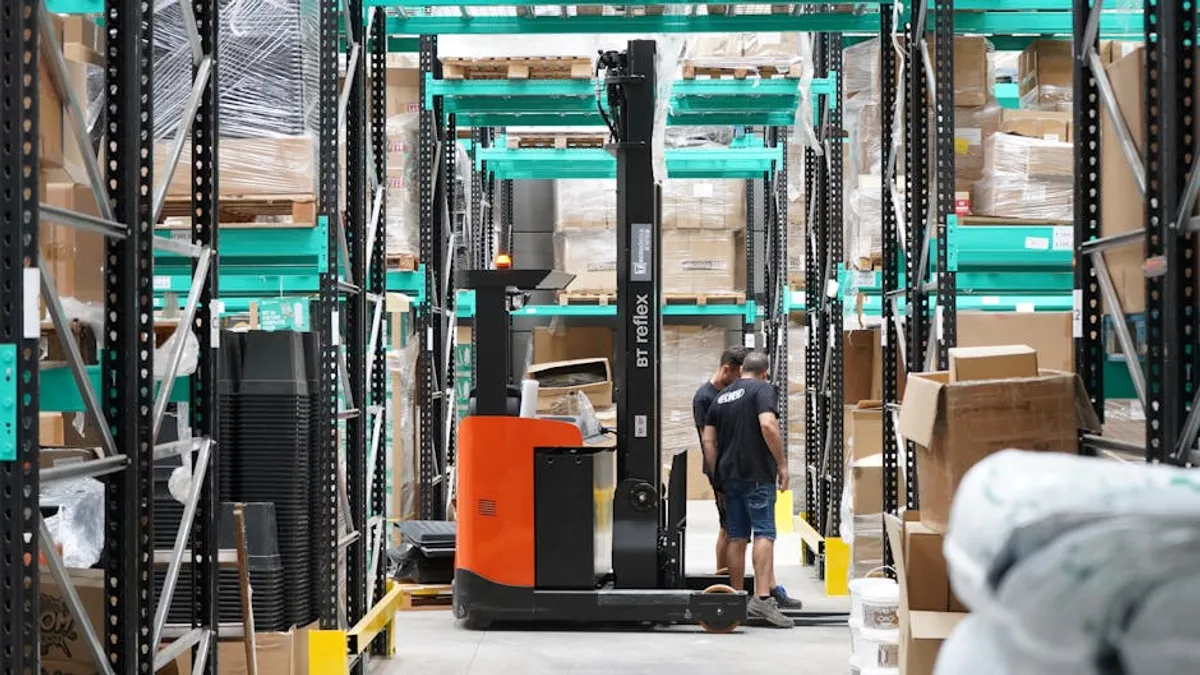
The right equipment is essential for moving goods safely and efficiently. This ranges from manual pallet jacks and forklifts to automated guided vehicles (AGVs) and robotic picking systems. The selection depends on warehouse size, product characteristics, throughput requirements, and budget. Investing in appropriate equipment reduces physical strain on workers, increases speed, and minimizes product damage.
Warehouse Layout and Design
An optimized layout minimizes travel time, prevents congestion, and maximizes storage density. Strategic design considers product flow, placing fast-moving items closer to shipping, and grouping similar items. Factors like aisle width, rack configuration, and staging areas are all critical to efficient movement and accessibility.
Labor Management and Training
A skilled workforce is indispensable. Effective labor management involves optimizing task assignments, tracking performance, and providing continuous training on safety protocols, equipment operation, and WMS usage. Investing in training enhances productivity, reduces errors, and improves worker retention.
Pro Tip: Implement a robust data analytics framework for your warehouse operations. Beyond basic inventory reports, analyze picking paths, putaway times, order cycle times, and labor productivity. This granular data reveals hidden inefficiencies, informs layout adjustments, and justifies investments in automation, moving your operations from reactive to proactive optimization.
Key Challenges Facing Logistics Managers
Logistics managers navigate a complex landscape of challenges that can impact warehouse efficiency and profitability:
- Rising Customer Expectations: Demands for faster delivery, same-day shipping, and perfect order fulfillment place immense pressure on warehouse operations.
- Labor Shortages and Costs: Attracting and retaining skilled warehouse personnel remains a significant challenge, leading to increased labor costs and potential operational disruptions.
- Space Optimization: As inventory volumes fluctuate and real estate costs rise, maximizing storage density and efficient utilization of existing space becomes critical.
- Technology Adoption: Integrating new technologies like automation, IoT sensors, and advanced analytics requires significant upfront investment, technical expertise, and change management.
- Supply Chain Disruptions: Geopolitical events, natural disasters, and economic volatility can severely impact inbound and outbound flows, requiring agile and resilient warehouse operations.
Driving Efficiency and Profitability Through Warehouse Logistics
To overcome challenges and achieve operational excellence, logistics managers must adopt a proactive and continuous improvement mindset:
Implement lean warehouse principles to identify and eliminate waste in all forms—overproduction, waiting, unnecessary transport, over-processing, excess inventory, unnecessary motion, and defects. This involves optimizing every step from receiving to shipping.
Explore automation and robotics solutions. Automated storage and retrieval systems (AS/RS), robotic process automation (RPA) for administrative tasks, and collaborative robots (cobots) can significantly increase throughput, reduce labor costs, and improve accuracy in repetitive tasks.
Leverage data analytics for continuous improvement. Utilize WMS data, sensor data, and historical trends to forecast demand more accurately, optimize inventory levels, and identify performance bottlenecks. Predictive analytics can inform staffing levels and equipment maintenance schedules.
Consider cross-docking or direct shipping for high-velocity items. Cross-docking minimizes storage time by transferring goods directly from inbound to outbound logistics, reducing handling costs and accelerating delivery. Direct shipping bypasses the warehouse entirely for certain orders, further streamlining the process.
Regularly review and optimize warehouse layout. As product mixes and order profiles change, an annual review of the physical layout can identify opportunities to improve flow, reduce travel distances, and enhance picking efficiency.
Frequently Asked Questions
What is the primary goal of warehouse logistics?
The primary goal is to manage the flow of goods within a warehouse efficiently, accurately, and cost-effectively, ensuring timely order fulfillment and optimal inventory control to support the overall supply chain.
How does a WMS benefit warehouse operations?
A Warehouse Management System (WMS) provides real-time visibility into inventory, optimizes storage and retrieval processes, streamlines tasks like picking and packing, reduces manual errors, and improves overall operational efficiency and accuracy.
What are common challenges in warehouse logistics?
Key challenges include meeting rising customer expectations for speed, managing labor shortages and costs, optimizing storage space, integrating new technologies, and adapting to supply chain disruptions.
How can automation improve warehouse logistics?
Automation, through systems like AS/RS and robotics, can significantly increase throughput, reduce reliance on manual labor for repetitive tasks, improve picking accuracy, and enhance safety within the warehouse environment.