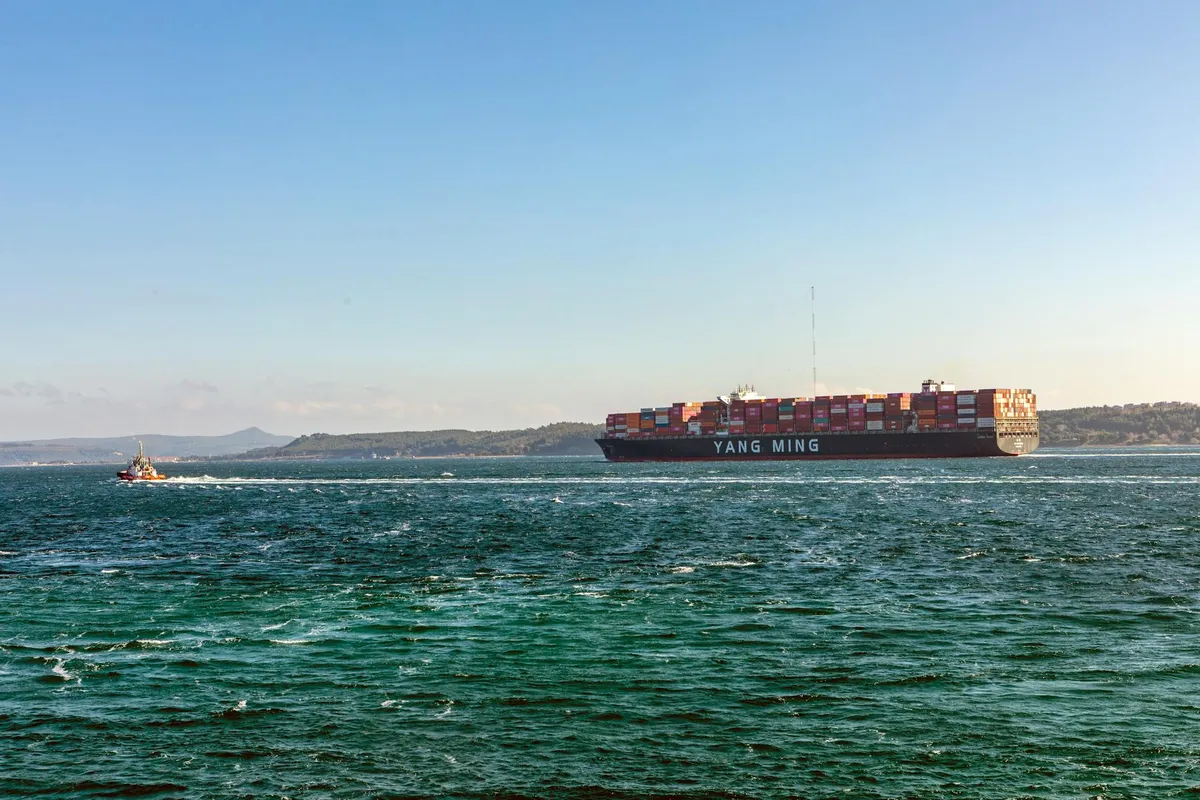
The Red Sea security situation has now been disrupting Suez routings for long enough that the Cape of Good Hope is effectively the default on Asia-Europe for most of the major container lines. The brokers I talk to on Monday mornings stopped framing the situation as a temporary disruption sometime in the back half of 2024. By the start of 2026 the chartering market on the lane is structured around the longer routing, and the rate dynamics have settled into something that looks meaningfully different from what was trading in 2023.
Worth being clear up front about what is and is not going on. The carriers have not suddenly become more profitable because of the longer routing. They have absorbed substantial additional bunker cost, additional vessel deployment, and additional positioning friction. The rate increases that the spot market saw through 2024 and into 2025 reflected that absorption only partially, and a lot of the cost compression has been worn by the lines rather than passed through to BCO contracts. What has changed is the structure of capacity utilization on the lane and the period-rate dynamics that follow from it.
What the additional vessel demand actually looks like
The Cape routing adds roughly two weeks to the round-trip on an Asia-North Europe loop compared with the Suez routing. For a weekly string, that means an additional one or two vessels deployed to maintain the same sailing frequency. Multiply that across the major alliances and you are looking at on the order of fifty to seventy additional vessels absorbed into Asia-Europe capacity just to maintain pre-disruption service levels.
Those vessels have to come from somewhere. In 2024 they came partly from cascaded tonnage off the secondary trades and partly from accelerating newbuilding deliveries. In 2025 the newbuilding wave was the dominant supply factor, and the order book has been working through. Into 2026 the balance is tipping back toward a tighter market for available period tonnage, particularly in the 8,000 to 14,000 TEU range that fills out most of the Asia-Europe strings.
That tightness is what is showing up in the period rates the brokers are quoting now. A modern 13,000 TEU vessel that was fixing at around USD 35,000 to 40,000 per day in early 2024 is now seeing offers above USD 50,000 for one-year periods, with longer periods commanding meaningful premiums. The spot market for shorter-period fixtures is firmer still in the segments that are most exposed to the Asia-Europe demand.
The bunker cost question
The Cape routing burns more fuel. The exact additional consumption depends on vessel design, speed, and load factor, but for a modern post-Panamax containership the additional bunker bill for an Asia-North Europe round trip is in the range of USD 500,000 to USD 900,000 depending on bunker prices. Across a string and across a year that adds up to material money — and the question of who pays it has been one of the more interesting commercial conversations of the past two years.
The contract structure on Asia-Europe long-term BCO contracts varies. Some have explicit bunker adjustment factor mechanisms that pass through fuel cost shifts on a defined formula. Some have less explicit pass-throughs and have been the subject of more difficult renegotiations through 2024 and 2025. The new contract season for 2026 has settled out with structures that are generally more explicit about routing-contingent bunker mechanisms, which is one of the durable changes the Red Sea situation has produced.
For the spot market the bunker absorption is simpler — it gets priced into the spot rate. The longer routing has been a meaningful contributor to the spot rate levels through 2024 and into 2025, alongside the capacity utilization effects that the additional voyage time produces.
What the alliance reshuffles mean for the lane
The alliance landscape on Asia-Europe has been substantially reshaped over the past eighteen months. The breakup of 2M, the formation of the Gemini Cooperation between Maersk and Hapag-Lloyd, and the reconfiguration of the remaining MSC strings and Ocean Alliance services have produced a structure that looks materially different from what the lane had through most of the 2020s.
The implications for the chartering market are not always obvious from the top-level alliance announcements. The relevant question for the period rate is what the cumulative vessel demand from the reshuffled services looks like and how that demand interacts with the available supply in the relevant size segments. The Gemini network in particular has been deploying tonnage with somewhat different size-segment preferences than the predecessor 2M services, and the secondary effects on the broader chartering market have been working through.
The MSC standalone services have been deploying substantial owned and chartered tonnage that has been one of the principal absorbers of newbuilding capacity through 2025. The carrier's chartering activity has been a major factor in the period-rate firmness across multiple size segments and is one of the things the broker desks watch most carefully.
The newbuilding picture and what comes next
The container ship orderbook still has substantial deliveries scheduled through 2026 and into 2027, with the larger vessel sizes particularly well-represented. Whether that delivery wave produces the rate softening that some analysts have been calling for depends substantially on whether the Cape routing persists and on whether the cascaded tonnage off Asia-Europe finds productive deployment on secondary trades.
The current view from most of the broker desks I talk to is that the rate softening will be more modest than the orderbook would suggest in isolation, principally because the Red Sea situation does not look like it is resolving on a short timeline. The market has been pricing the Cape routing as a multi-year situation, and the chartering structures that have developed reflect that assessment.
That said, the market has been wrong before about the durability of disruption-driven rate strength. The structural absorption of the additional capacity from longer routings is real, but it is not unlimited, and the carriers have powerful incentives to find operational efficiencies that reduce the vessel demand from the longer voyages. The trend through 2025 has been toward modest speed reduction and toward more efficient vessel deployment, both of which marginally reduce the additional capacity required for the longer routing.
What contract season 2026 has looked like
The contract negotiations for 2026 BCO contracts settled out at rates that reflect a market that has accepted the Cape routing as the operational baseline. Long-term contracts on Asia-North Europe came in firmer than the spot indicators alone would have suggested, principally because BCOs have been willing to pay for service reliability commitments that the carriers can credibly make under the longer-routing structure.
The contract terms have evolved alongside the rate levels. The routing-contingent bunker mechanisms are more explicit. The capacity commitments are more carefully specified. The dispute-resolution mechanisms for service-failure events have been substantively reworked in many contracts following the difficulties of 2023 and 2024. The contracts that came out of contract season 2026 are meaningfully different documents from the contracts that came out of contract season 2022.
The implications for the chartering market are that the carrier-side demand for tonnage is structurally tied to the BCO commitments. The contract book carriers have written for 2026 implies a vessel requirement that supports the period-rate firmness through the year. Whether that firmness persists into 2027 depends on the contract structures that develop through the next negotiation cycle and on whether the Red Sea situation develops in ways that change the routing math.
The view from the desk
From the broker desks I spend the most time talking to, the assessment is that the Asia-Europe charter market is in a structurally firmer state than the orderbook alone would suggest, that the carrier demand reflects a multi-year commitment to the Cape routing as the operational baseline, and that the rate softening some analysts are calling for is more likely to be modest than dramatic. The desk view is also that the chartering structures that have developed reflect lessons learned from the disruptions of 2023 and 2024, and the contracts being written now look materially different from the contracts that were being written four years ago.
None of that is a confident prediction about where rates will be in twelve months. Anyone who tells you they can predict container charter rates with confidence over that horizon is selling something. What the desk view is reasonably confident about is the structural factors that are driving the current rate levels and the directionality of where those factors are likely to move. The rest is what the chartering managers and the broker desks earn their pay for actually figuring out as the year develops.