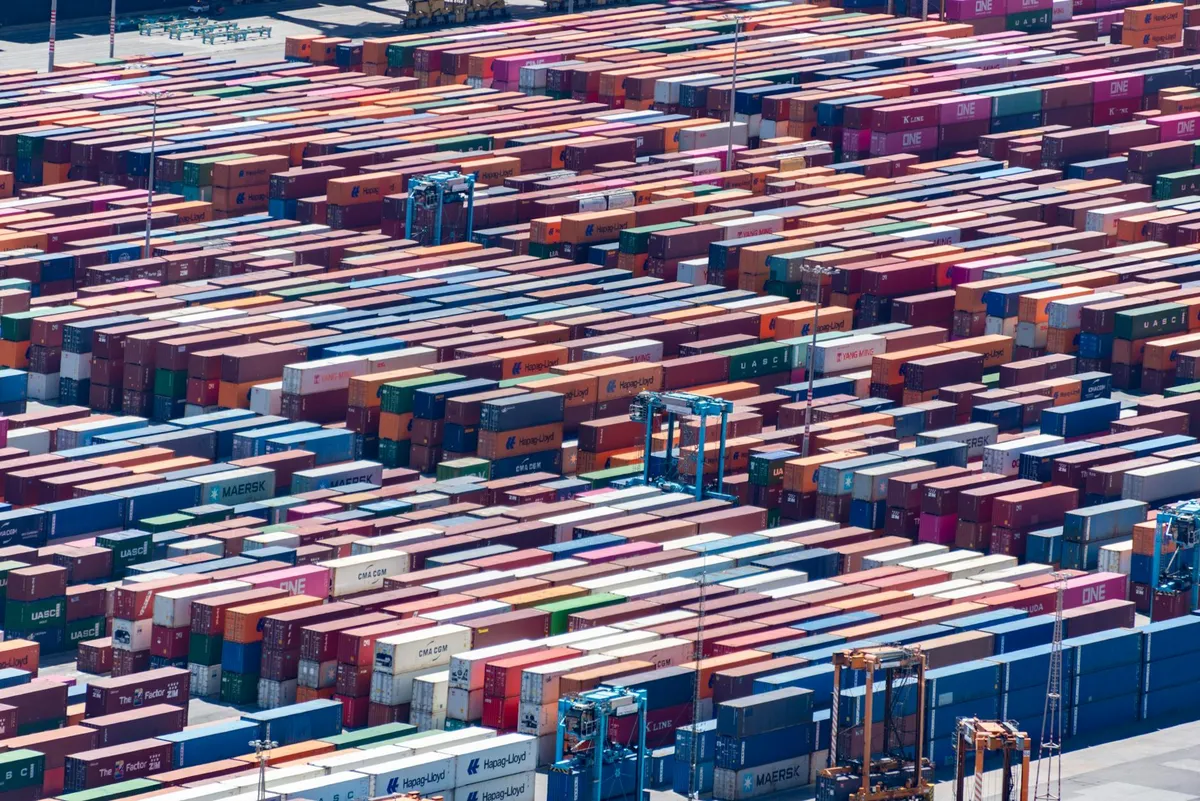
Empty container repositioning is one of those structural problems in liner shipping that everyone in the industry knows about and that few people outside the industry think about. The fundamental problem is that containerized trade flows are not balanced — more boxes flow from Asia to North America and Europe than flow back, more boxes flow from major exporting regions to major importing regions than vice versa, and the resulting imbalance forces carriers to reposition empty containers across the network at substantial cost.
The cost of empty repositioning is substantial enough that it constitutes a major component of carrier operating costs and a meaningful contributor to the freight rates that shippers ultimately pay. Estimates of the global cost vary but generally come in at several billion dollars per year industry-wide, with the precise figure depending on how one accounts for various marginal costs and operational complexity factors.
This piece works through what the empty repositioning problem actually involves, what the carriers have been doing recently to manage it more effectively, and what the supply-chain implications are for shippers and forwarders who deal with the operational consequences.
What the imbalance actually looks like
The structural imbalance in containerized trade has been a feature of the industry since containerization scaled in the 1960s and 1970s. The current pattern shows substantial east-to-west and south-to-north imbalances on the major trades, with Asia-to-North America and Asia-to-Europe being the two largest single sources of empty repositioning demand.
The eastbound transpacific — Asia to North America — moves substantially more loaded containers than the westbound. The resulting imbalance produces empty container accumulation in North America and a need to reposition empties back to Asia to support the ongoing eastbound flow. The cost of the repositioning is a structural component of the rate structure on the lane.
The Asia-Europe trade shows a similar but somewhat less extreme imbalance, with eastbound loaded volumes substantially exceeding westbound loaded volumes. The empty repositioning back to Asia is correspondingly a major cost factor for the carriers on the lane.
The smaller trades show various imbalances, with the cumulative pattern producing complex empty container flow patterns that the carriers manage through a combination of repositioning sailings, network routing decisions, and equipment leasing arrangements that adjust the available container pool to the demand distribution.
What the operational solutions have looked like
The carriers have been working on empty repositioning optimization for the entire history of containerized shipping, with substantial operational sophistication having developed over the decades. The principal mechanisms involve network routing decisions that consolidate empty repositioning into the most cost-efficient flows, equipment imbalance pricing that incentivizes shippers to support the repositioning flows where possible, and network planning that minimizes the total empty repositioning cost subject to service-level commitments.
The network routing decisions involve the operational research work that determines how vessels are deployed, what port rotations they follow, and how empty containers are moved through the network. The work is substantial enough that the major carriers maintain dedicated operational planning teams whose principal function is empty repositioning optimization across the global network.
The equipment imbalance pricing mechanisms include rate differentials between high-demand and low-demand directions, peak-season surcharges that adjust for seasonal imbalance variation, and equipment-specific charges that price the operational cost of providing equipment in high-demand contexts. The pricing structures have been refined over many years and represent substantial operational sophistication.
The network planning includes the alliance-level decisions about how services are structured to minimize the total network cost subject to service commitments. The major alliances have been adjusting their service structures over recent years with increasing attention to the empty repositioning implications of specific routing decisions, with the Gemini Cooperation's hub-and-spoke structure being one of the more visible recent examples.
What's actually new in the past few years
Several specific developments over the past few years have changed the empty repositioning picture in ways that the trade-press attention has been intermittent on.
The first development is the substantial increase in the carriers' use of data analytics for empty repositioning optimization. The data flows from terminal operating systems, vessel operations, and customer demand patterns have been growing in detail and timeliness, and the carriers have been deploying analytical capabilities that enable more sophisticated empty repositioning decisions than were possible a decade ago.
The data-driven approaches include predictive demand forecasting that allows preemptive repositioning decisions, real-time inventory tracking that supports operational decisions on a shorter time scale, and integrated network planning that incorporates the full cost picture across the global network. The major carriers have been investing in the analytical capabilities, with measurable operational improvements working through.
The second development is the increasing use of triangulation — finding additional cargo flows that use the containers that would otherwise be repositioned empty. The triangulation work involves identifying customer relationships that produce loaded backhauls on routes that have been historically empty, and the carriers have been more aggressive in pursuing the relevant customer segments through the past several years.
The triangulation opportunities are not unlimited and not all routes have viable backhaul cargo flows that match the equipment availability. But the cumulative effect of more aggressive triangulation has been measurable, and the operational research work that supports the identification of triangulation opportunities has been advancing.
The third development is the increasing integration of inland logistics into the empty repositioning planning. The inland leg of the container journey has historically been a less integrated component of the carrier operational planning, with the empty repositioning decisions made principally at the marine network level. The integration of inland operations into the planning has been advancing, with implications for the empty container flow patterns that the carriers can manage.
What the shipper implications are
The empty repositioning problem affects shippers through several specific operational and commercial channels that are worth understanding for the operational planning and the contract negotiations.
The first channel is rate structure. The empty repositioning cost is a structural component of the freight rate that shippers pay, with the cost being passed through more or less explicitly depending on the contract structure and the trade direction. The shippers on the demand-strong direction pay more for the equipment than the shippers on the demand-weak direction, which is the appropriate economic structure but not always understood by the shippers who only see one side of the trade.
The second channel is equipment availability. The empty repositioning operations affect the equipment availability picture at specific origins on specific timing, with implications for the shipper operations that depend on equipment availability. The shippers that have established equipment-management relationships with the carriers generally have more reliable equipment access than shippers that rely on spot-market availability, with the relationship value reflecting in part the empty repositioning cost the carrier accepts to provide the equipment.
The third channel is service patterns. The network routing decisions that the carriers make for empty repositioning optimization affect the service patterns that shippers depend on, with implications for transit times, port-pair coverage, and service reliability. The shippers that engage with the carriers' network planning have more visibility into the upcoming service-pattern adjustments than the shippers that experience the changes as fait accompli.
The newer experimental approaches
Several newer approaches to empty repositioning have been emerging through the past several years and are worth understanding because they may become more substantial parts of the industry response over the coming years.
One approach is the more aggressive use of equipment leasing and short-term equipment redeployment. The container leasing market has been developing capabilities for shorter-term equipment provision that allows carriers to adjust their equipment pool to actual demand rather than committing to long-term equipment ownership for what may be transient demand patterns. The leasing companies have been refining their service offerings to support more dynamic equipment provision.
Another approach is collaborative repositioning across carriers. The competitive nature of the industry has historically limited the scope for inter-carrier collaboration on empty repositioning, but several smaller-scale experiments have demonstrated that some forms of collaboration can produce mutual operational benefits without creating problematic competitive issues. The development of these collaborative mechanisms is at an early stage but may become more substantial.
A third approach is the deeper integration with shipper supply-chain planning. The shippers who have shared their demand forecasts and operational plans with the carriers more openly have generally received better service in return, with the carrier ability to plan equipment provision on a longer time horizon producing operational benefits for both sides. The development of the data-sharing infrastructure that supports the integration has been advancing.
What it means for 2026 and beyond
The empty repositioning problem will continue to be a substantial component of liner shipping operations through 2026 and the foreseeable future, with the structural imbalances in containerized trade flow not showing signs of fundamental reversal. The carriers will continue to manage the problem through the combination of operational, commercial and analytical mechanisms that have been developing over the decades.
The pace of operational improvement in empty repositioning has been accelerating with the data analytics and the network optimization developments, and the trajectory is toward more sophisticated management of the problem rather than fundamental elimination of it. The shippers who engage thoughtfully with the carriers on the equipment and service questions will continue to benefit from the operational sophistication that the carriers have been developing.
The cost picture for empty repositioning is likely to be supported through 2026 by the same supply-discipline and operational-discipline factors that have supported the broader rate environment, with carriers being less willing to absorb empty repositioning cost without compensating rate support than was historically the case. The implications for shippers are that the equipment availability and the rate structure will continue to reflect the underlying operational economics with relatively transparent visibility.
The trade-press attention to empty repositioning has been less than the operational and commercial importance of the topic warrants, partly because the technical operational work that the problem involves does not lend itself easily to general coverage. The work is real and continuing, and the carriers that do it well have been delivering operational and commercial results that the shipper communities have generally been benefiting from. Worth paying attention to as the network optimization continues to develop.